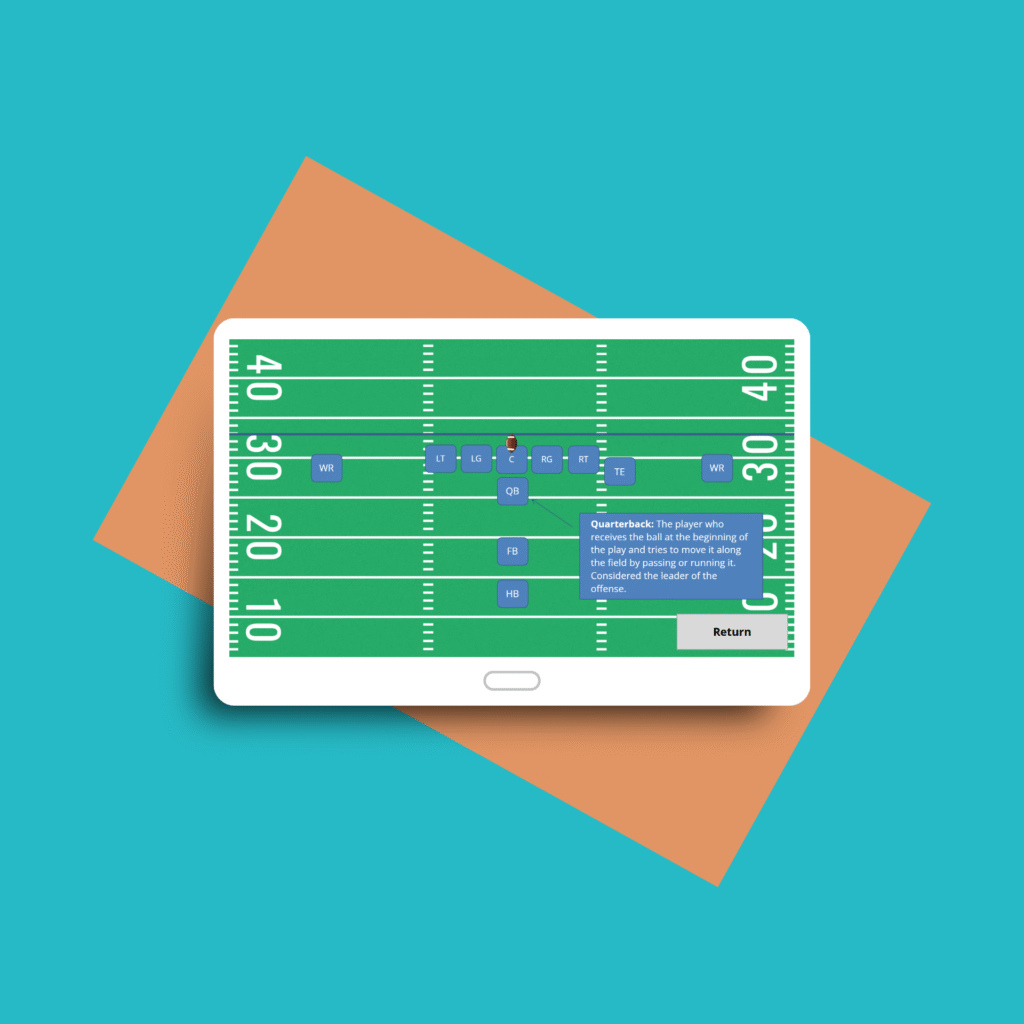
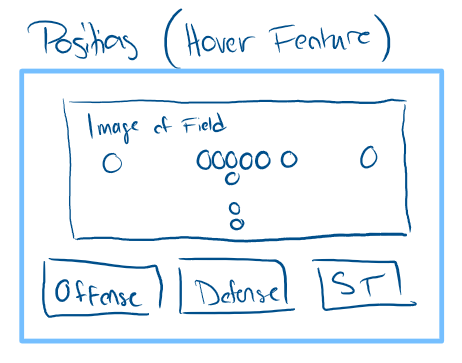
I created this application to help new football players learn their plays in a more interactive way compared to the traditional binder. The primary goal of this project was to develop a customizable playbook application that allows coaches to assign plays for athletes to review at home, enabling them to come to practice better prepared. This project was completed for my Instructional Development and Production course at Indiana University.
Audience: Beginner football players
Responsibilities: Instructional Design, eLearning Development
In reality, every playbook is unique and tailored to a team by its coaches. However, since this project is a general prototype, I researched common formations and plays to incorporate into the application, supplementing that with my own knowledge of the sport.
Instead of using the typical linear structure in Articulate Storyline, I disabled the traditional module-by-module menu and created a non-linear navigation flow that functions more like a mobile application. Therefore, I first created a flowchart storyboard in Microsoft OneNote. Each color represents another layer in the hierarchy that starts from the homepage. Click the button below to view the entire storyboard.
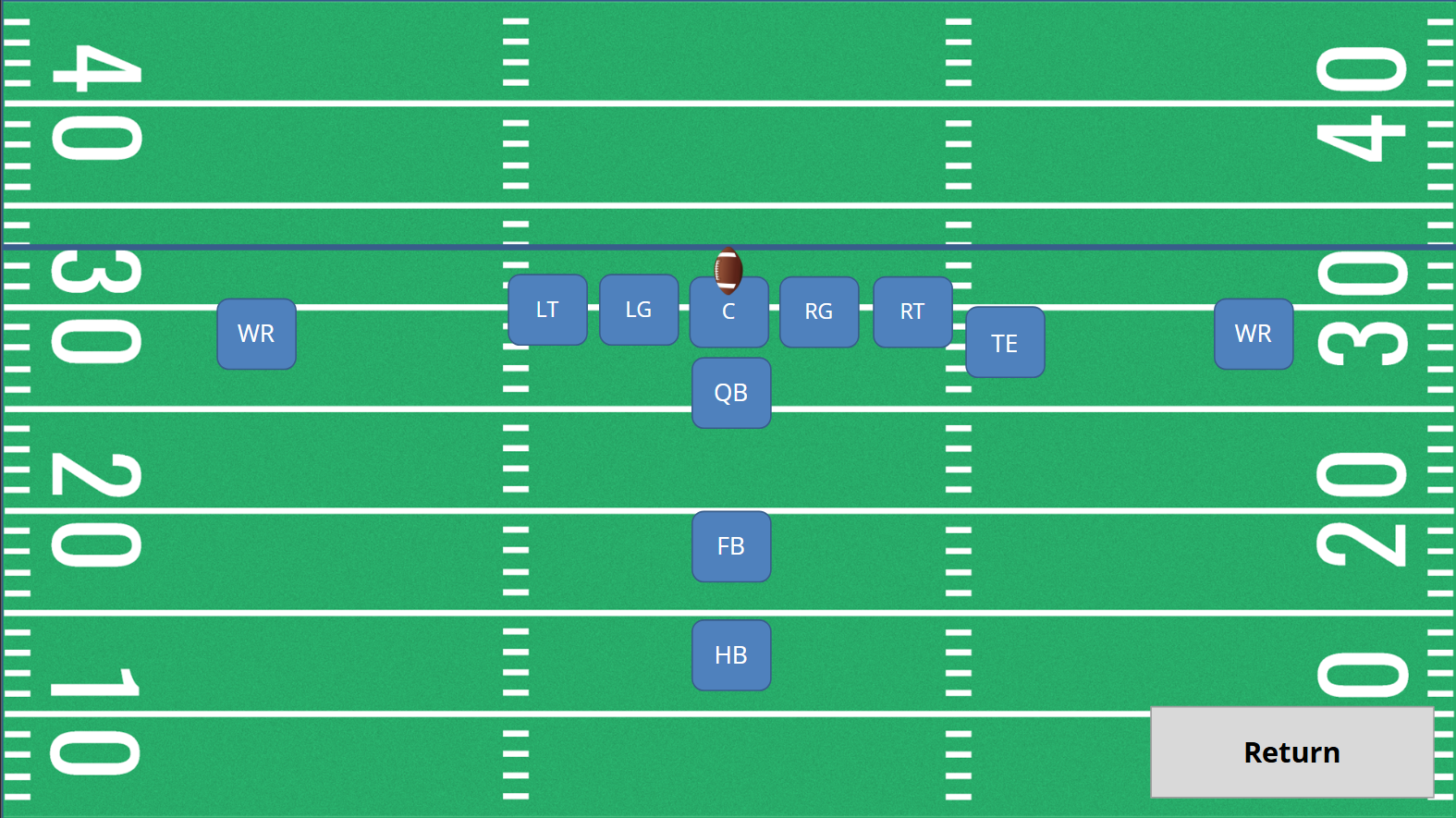
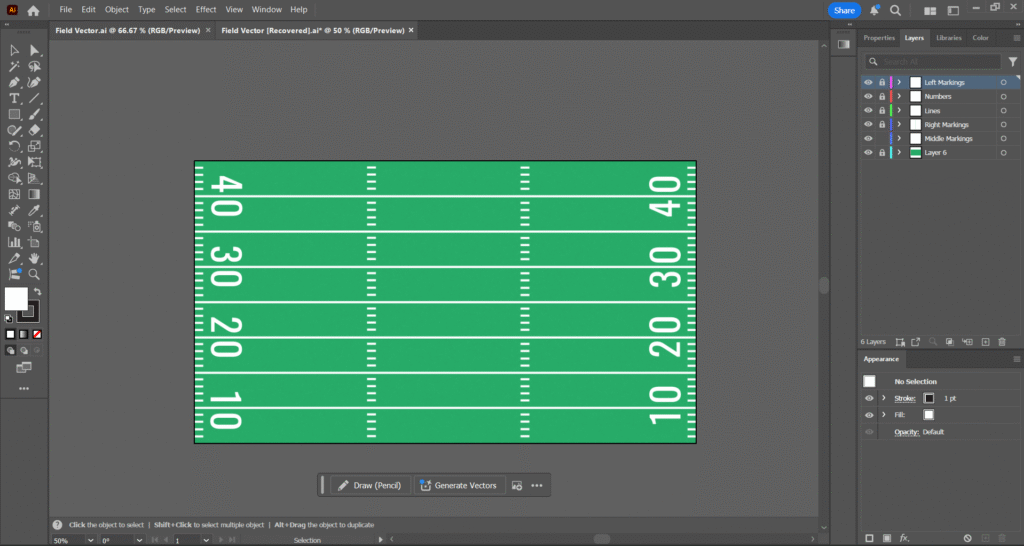
I created the football field background in Adobe Illustrator, as shown below. The biggest challenge during this step was accurately spacing the hash marks. The measurements needed to be precise so each play could reflect the correct distances on the field. For example, when illustrating a wide receiver’s route, I wanted to show the approximate distance they would travel in that specific play, therefore everything had to line up with the background.
Creating the Final Application
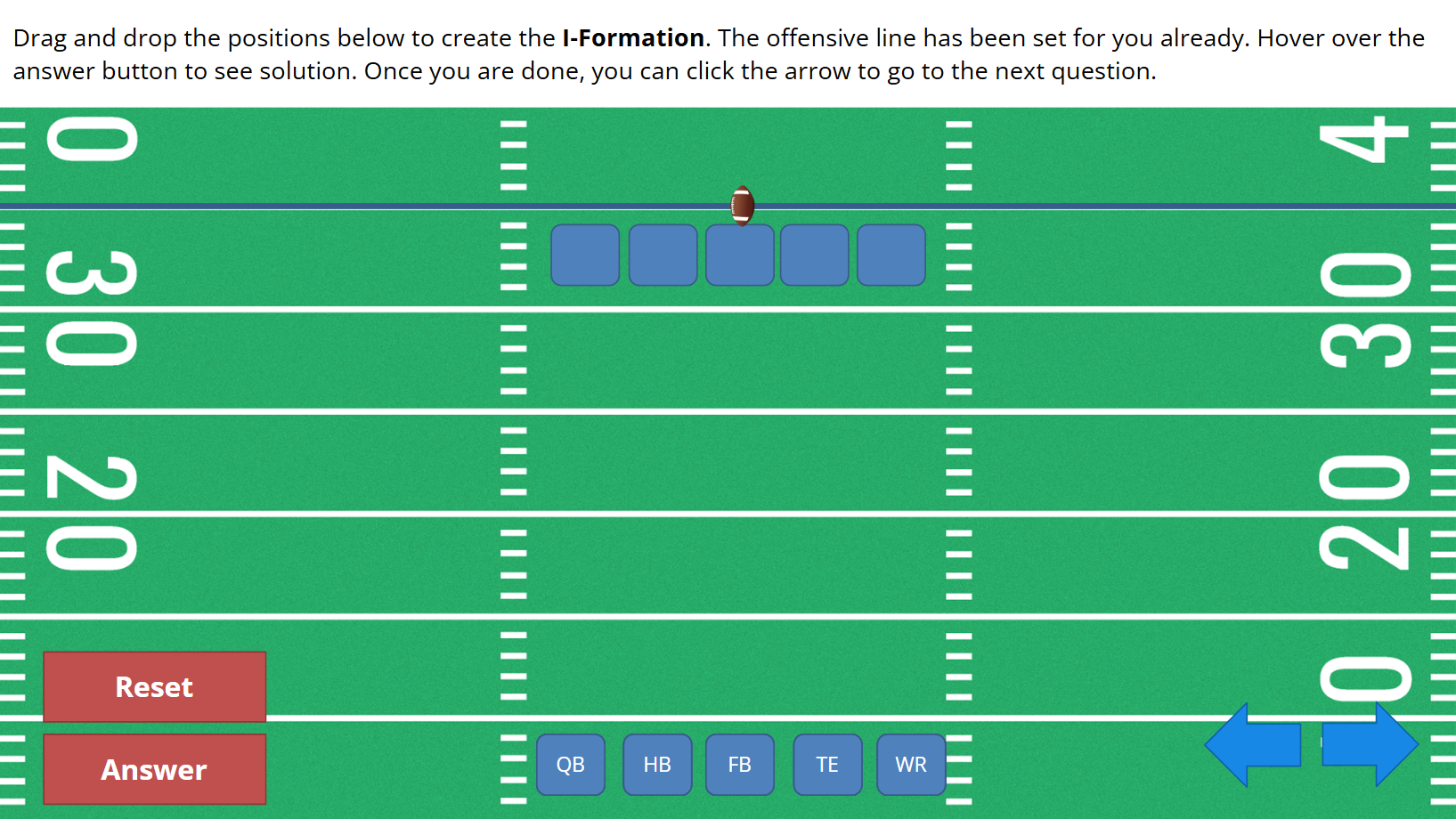
I created the final application using Articulate Storyline. Since one of my main goals with this application was to enhance the interactivity of a playbook, I learned and incorporated the following interactions in Storyline.
FLIP CARDS
To create the flip card animation, I utilized mutliple layers and triggered the swivel animation through a click.
MOTION PATHS
To create visuals for specific definitions, I utilized motion paths for each object and triggered them using a ‘play’ button.
DRAG AND DROP
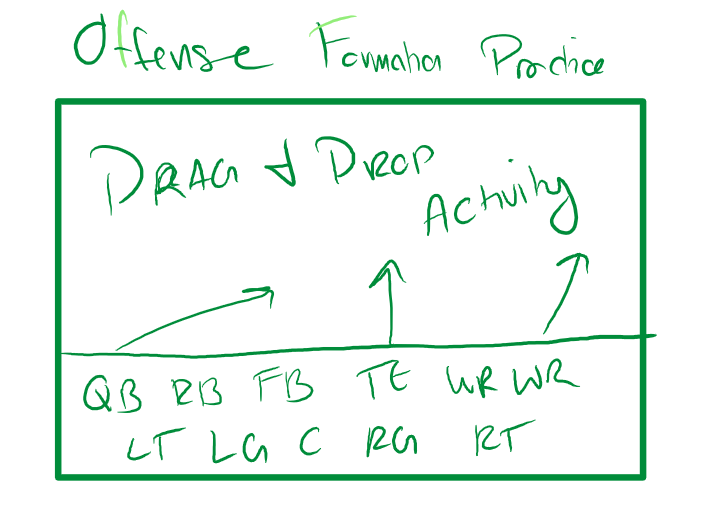
To allow free movement of objects, I designed a drag-and-drop slide without setting any drop targets and disabled the drag-return feature.
Evaluating the Project
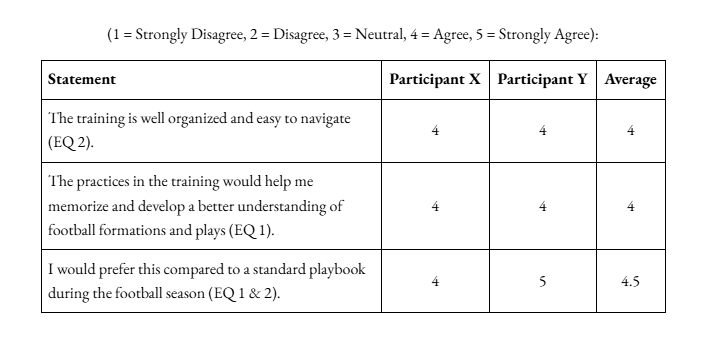
To test the application, I presented it to two participants who had recent experience in middle school football. The evaluation was based on the following two questions:
Evaluation Question 1: Does the course help learners learn and memorize the plays and formations presented?
Evaluation Question 2: Is the course easy to navigate and more engaging than a standard playbook?
I completed the evaluation using a survey that implemented the Likert scale and individual interviews that consisted of open-ended questions. Based on the overall feedback, the main changes I would implement in the next stage of development would be the replacement of the quiz with an interactive activity, development of a mobile version, and increased navigation connections between the different sections. Click the buttons below to view the entire evaluation report and recommended revisions.